Blog Detail
NaijaTalk
|2026-08-29
Ben Bruce Says Nigeria’s Power Privatisation Has Failed
Ben Bruce Says Nigeria’s Power Privatisation Has Failed
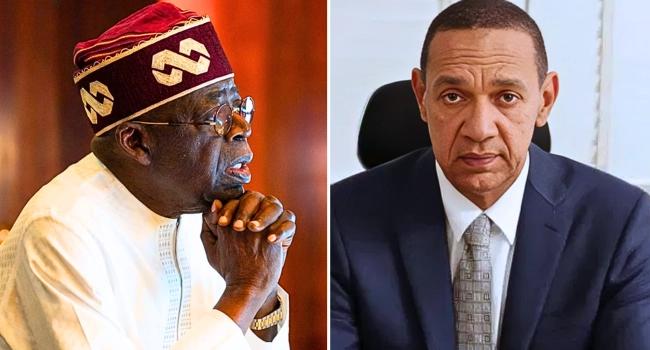
Former Senator Ben Murray-Bruce has called on President Bola Ahmed Tinubu to fundamentally overhaul Nigeria’s electricity sector, arguing that the 2013 privatisation of the power industry has failed to deliver the reliable electricity supply Nigerians were promised. Murray-Bruce made the call in an open letter to President Tinubu published on Saturday, August 29, 2026. In the letter, titled “Start the Dance on Electricity: The Privatisation Failed.
The Owners Are Billing Darkness,” he argued that Nigeria needs to move away from an overcentralised electricity system and give states, communities and private investors greater responsibility for generating and distributing power. The former lawmaker based his argument partly on figures from the Nigerian Electricity Regulatory Commission, NERC. He said that although Nigeria had 13,625 megawatts of installed generation capacity as of April 2026, only 4,286MW was available for dispatch, representing about 31 per cent of installed capacity.
He also said 10 of the country's 28 power plants accounted for about 81 per cent of total electricity generation. Murray-Bruce also pointed to the instability of the national grid. He cited an August 22 incident during which available generation reportedly fell from more than 4,000MW earlier in the day to about 1,132MW at around 8:30 p.m.
He said several generating stations were producing no electricity at the time and used the incident to argue that the country's existing power structure is fundamentally unreliable. According to the former senator, the central problem dates back to the 2013 privatisation programme. He argued that the companies that acquired generation and distribution assets had the financial capacity to purchase the assets but did not have sufficient capital to operate, maintain and expand them at the scale Nigeria requires.
Murray-Bruce said Nigeria should have attracted major international electricity companies with the technical expertise and financial strength to invest heavily in the sector. Instead, he argued, the country transferred important electricity assets to investors whose financial capacity was inadequate for the enormous investment required. He also criticised the country's electricity distribution system, particularly the continued use of estimated billing.
According to figures he cited, about 5.1 million of Nigeria's 12.31 million active electricity customers remained unmetered as of February 2026. He questioned why consumers should continue receiving estimated bills when they do not have functioning meters that accurately measure their electricity consumption. The former senator further raised concerns about the financial relationship between electricity distribution companies, generation companies and government.
He argued that the sector has remained dependent on government intervention, subsidies and debt settlements despite the privatisation programme being introduced more than a decade ago. His comments come at a time when the Federal Government itself is pursuing another round of reforms aimed at improving the electricity sector. The National Council on Privatisation recently reviewed ongoing reforms, including the Distribution Sector Recovery Programme, which is backed by $500 million in World Bank financing.
The government said 668,000 electricity meters had been installed from 1.033 million meters delivered under the first phase of the programme. The government also said approximately 60 per cent of active electricity customers have now been metered, with further installations expected under the ongoing metering programme. The stated objective is to reduce the metering gap and eventually eliminate arbitrary estimated billing for registered customers.
The Federal Government has also been working to address the large financial obligations within the electricity market. Recent interventions include payments to generation companies and plans to settle legacy liabilities, with the government arguing that clearing outstanding debts will improve liquidity and restore investor confidence in the sector. However, Murray-Bruce believes that financial interventions alone will not solve Nigeria's electricity problems.
His preferred solution is a more decentralised electricity system in which communities, estates and states can develop their own power systems instead of depending almost entirely on the national grid. He argued that communities and residential estates should be able to obtain financing to develop independent electricity systems, including solar-powered installations, while state governments could provide guarantees and regulate the systems. He also called for states to take greater responsibility for powering facilities such as streetlights, schools, primary healthcare centres and police stations.
His argument is partly based on changes introduced by the Electricity Act 2023, which opened the door for states to establish electricity markets and regulatory commissions. According to the Bureau of Public Enterprises, 17 states had established their own electricity regulatory commissions since April 2024 as of August 2026. Murray-Bruce pointed to the electricity system operated by Geometric Power in Aba as an example of what he believes decentralised electricity supply can achieve.
He argued that localised generation and distribution could provide communities with greater control over their electricity supply while reducing their dependence on the national grid. His proposal comes amid renewed public frustration over electricity reliability, despite years of government spending and reform efforts. A recent editorial by The Guardian noted that more than a decade after the privatisation programme, expected improvements in efficiency, investment and service delivery had not materialised to the extent initially envisaged.
The Federal Government, however, maintains that reforms are underway. Power Minister Joseph Tegbe recently outlined a reform agenda focused on improving generation, transmission and distribution, expanding metering and addressing the financial and governance problems affecting the electricity market. The government has also said it is focused on improving power supply rather than introducing another electricity tariff increase beyond current levels.
The situation involving Kaduna Electricity Distribution Company also illustrates some of the challenges facing the privatised system. NERC dissolved the company's board earlier this month and appointed an interim board after what it described as prolonged financial, operational and governance failures. The regulator said the company's cumulative market obligations since privatisation had reached approximately ₦456.5 billion as of May 2026.
Murray-Bruce is therefore calling for a much deeper change rather than another temporary intervention. His argument is that Nigeria should stop relying on a single national electricity network to serve the entire country and instead create multiple local electricity systems capable of operating independently where appropriate. The debate comes as Nigeria continues to search for a sustainable solution to its long-running electricity crisis.
While the Federal Government is investing in metering, debt settlement, grid improvements and regulatory reforms, critics such as Murray-Bruce believe the country needs to fundamentally rethink the structure created by the 2013 privatisation. For millions of Nigerians and businesses that continue to rely on alternative sources of electricity when grid supply fails, the outcome of this debate will have direct economic consequences. Reliable electricity remains critical to manufacturing, small businesses, healthcare, education and household welfare.
Murray-Bruce has now challenged President Tinubu to make electricity reform a major priority and embrace a decentralised model that gives states and communities greater control over power generation and distribution. Whether the Federal Government adopts his proposal or continues with its current reform strategy, the renewed debate highlights one central reality: more than a decade after privatisation, Nigeria's electricity sector is still searching for a model that can consistently deliver reliable and affordable power to citizens.
reference: https://www.tvcnews.tv/nigerias-power-privatisation-has-failed-ben-bruce-tells-tinubu/?utm_source=chatgpt.com
Subscribe To Get Updates on Our Latest Blog Post
No credit card required
0 Comments
No comments yet.
Leave Your Comment
You may also like

NaijaTalk
Subscribe