Blog Detail
NaijaTalk
|2026-09-10
Customs Intercepts 204 Pump-Action Rifles at Lagos Port
Customs Intercepts 204 Pump-Action Rifles at Lagos Port
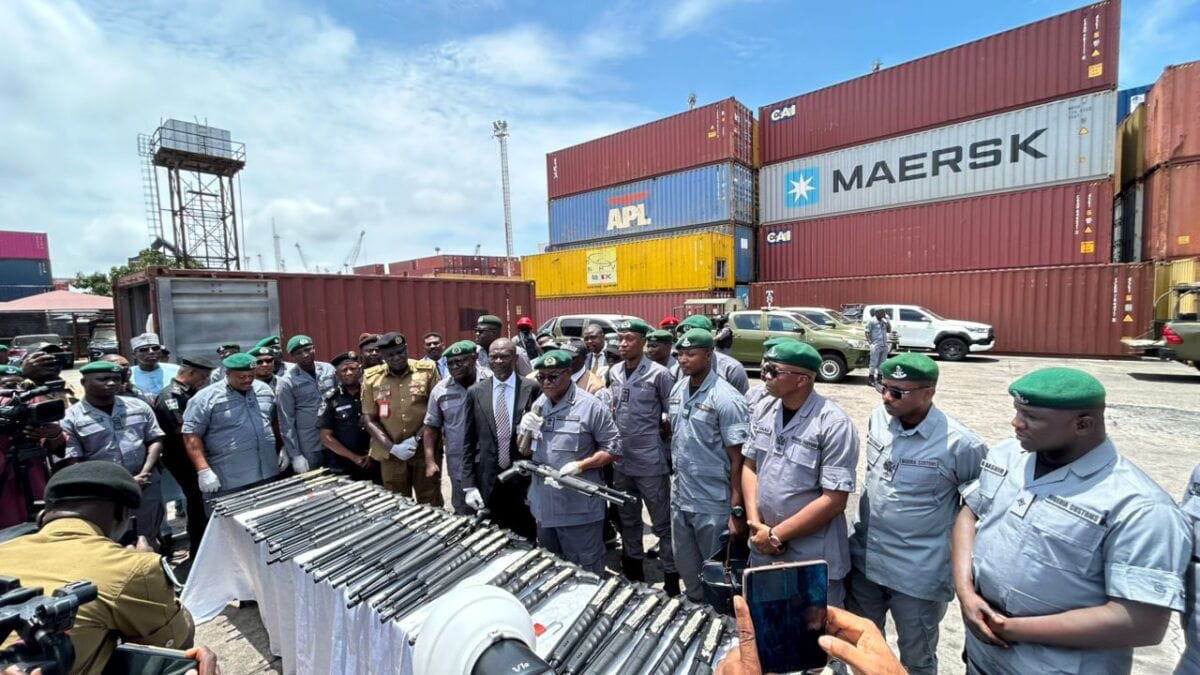
The Nigeria Customs Service has intercepted a consignment containing 204 pump-action rifles at the Tin Can Island Port in Lagos, in another major seizure aimed at preventing the illegal movement of firearms into Nigeria. The seizure was announced on August 31, 2026, by the Tin Can Island Port Command. According to the Customs Service, the firearms were concealed inside a 20-foot container that arrived in Nigeria aboard the vessel MV Algeciras Express from Turkey on August 16.
The container was flagged for examination and subjected to a 100 per cent physical inspection two days later. During the examination, Customs officers discovered firearm components hidden among declared household and commercial goods. The items listed in the declaration included used furniture, refrigerators, solar panels and detergent.
The discovery followed intelligence received by the Customs Service, which led officers to target the container for further inspection. Officials also found inconsistencies in the shipment's documentation, particularly concerning the identity of the consignee. Customs said the discrepancies form part of an ongoing investigation into the shipment and the individuals connected to it.
Following the discovery, the Nigeria Customs Service Armament Unit worked jointly with officials of the National Centre for the Control of Small Arms and Light Weapons, operating under the Office of the National Security Adviser, to examine and assemble the recovered components. The joint exercise resulted in the recovery and assembly of 204 MAS 49 ALTER MAGNUM pump-action rifles. Customs also recovered several additional firearm components, including 39 trigger pins, 58 locking lugs, 53 charging handles, 55 pistol grip screws, 56 springs, 56 trigger groups, 38 forward grips or hand guards, 67 forward grip latches, 56 pistol grips, 54 barrels and two U-plates.
The Comptroller-General of Customs, Adewale Adeniyi, described the interception as another indication of the Service's intelligence-led efforts to prevent arms trafficking through Nigeria's ports. He was represented at the briefing by the Deputy Comptroller-General in charge of Enforcement, Investigation and Inspection, Timi Bomodi. Bomodi said the interception demonstrated the importance of sustained intelligence gathering and the vigilance of Customs personnel.
He also stressed that the operation showed the growing difficulty for smugglers who attempt to conceal firearms inside containers or disguise them as legitimate household and commercial goods. The latest seizure comes shortly after another major firearms interception at the same port. Earlier in August, Customs announced the interception of knocked-down firearm components that were subsequently assembled into 399 pump-action rifles.
Those rifles were formally handed over to officials of the National Centre for the Control of Small Arms and Light Weapons. Customs said the latest recovered firearms and components were secured and documented for appropriate statutory action. The seizure also highlights the role of cooperation between the Nigeria Customs Service, the Office of the National Security Adviser and other security agencies in preventing illicit weapons from entering the country.
The movement of illegal firearms remains a major security concern in Nigeria because weapons can potentially find their way into the hands of criminal groups and contribute to violent crime and insecurity. Customs has therefore continued to strengthen intelligence gathering, cargo profiling, physical examination and inter-agency cooperation at the country's ports and borders. The Tin Can Island Port Command has warned smugglers and arms traffickers that the increasing use of intelligence, technology and risk-management systems is making it more difficult to conceal prohibited items in legitimate cargo.
Officials said the latest interception reinforces the need for continued vigilance and collaboration among security and regulatory agencies. Investigations into the shipment, including the documentation discrepancies and the parties connected to the consignment, are ongoing. Authorities are expected to determine how the firearms were imported, identify those responsible and take further action in accordance with Nigerian law.
reference: https://www.channelstv.com/2026/08/31/again-tin-can-customs-intercepts-204-pump-action-rifles/?utm_source=chatgpt.com
Subscribe To Get Updates on Our Latest Blog Post
No credit card required
0 Comments
No comments yet.
Leave Your Comment
You may also like

NaijaTalk
Subscribe