Blog Detail
NaijaTalk
|2026-09-01
Nigeria’s Economy Grows 4.43% in Second Quarter of 2026
# Nigeria’s Economy Grows 4.43% in Second Quarter of 2026
Nigeria’s economy grew by **4.43 per cent year-on-year in the second quarter of 2026**, marking a stronger performance compared with the 3.89 per cent growth recorded in the first quarter of the year. The latest figure was contained in the Gross Domestic Product report released by the **National Bureau of Statistics (NBS)** on Monday. The performance also represents an improvement over the 4.23 per cent real GDP growth recorded in the corresponding quarter of 2025.
The latest expansion indicates that economic activity continued to gain momentum during the quarter, with improvements recorded across both the oil and non-oil sectors. Nigeria's economy has maintained a gradual recovery following years of relatively weak growth, although the pace remains below the Federal Government's longer-term target. According to the NBS data, the oil sector recorded stronger activity during the quarter, supported by an increase in crude oil production.
Nigeria's average daily oil production rose to **1.72 million barrels per day in Q2 2026**, compared with 1.55 million barrels per day in the first quarter. The non-oil sector also contributed to the overall expansion, demonstrating that economic activity was not driven solely by crude oil production. Agriculture, manufacturing, oil and gas, and services all recorded positive contributions to the economy during the quarter.
The services sector remained the largest contributor to Nigeria's aggregate output. In nominal terms, Nigeria's aggregate GDP stood at approximately **N119.27 trillion** in the second quarter of 2026. This represents an 18.43 per cent increase compared with the N100.7 trillion recorded in the corresponding quarter of 2025.
The latest growth figures come against the backdrop of major economic reforms introduced by the administration of President Bola Ahmed Tinubu. His government has implemented significant changes to monetary, fiscal and foreign exchange policies, including the removal of the petrol subsidy and reforms to the foreign exchange market. While those measures have generated considerable economic and political debate because of their impact on household costs and living standards, the administration has consistently argued that the reforms are necessary to create a more stable foundation for long-term economic growth.
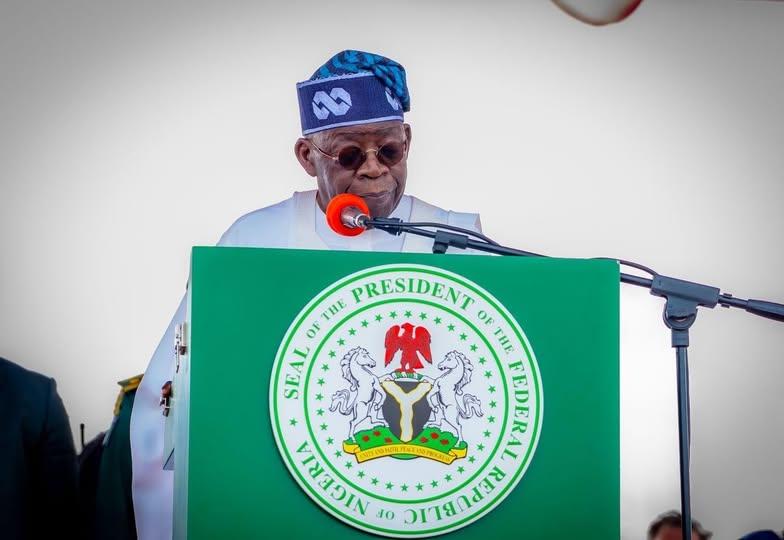
Reacting to the latest GDP figures, President Tinubu welcomed the 4.43 per cent growth and described the performance as evidence that the government's economic reforms are beginning to produce results. In a statement issued by his Special Adviser on Information and Strategy, Bayo Onanuga, the President said his administration had spent the past three years implementing difficult reforms aimed at stabilising the Nigerian economy. He said the government would now focus on ensuring that stronger economic performance translates into tangible improvements in the lives of Nigerians.
Tinubu said the government was committed to ensuring that economic growth eventually becomes more visible in the daily lives of ordinary Nigerians, particularly through improved household incomes and economic opportunities. The President also pointed to improvements in Nigeria's foreign reserves, trade position, credit ratings and infrastructure development as indicators that the economy was moving towards greater stability. He maintained that the government's Renewed Hope Agenda was beginning to produce measurable results.
Despite the positive GDP figure, economists and analysts have cautioned that economic growth alone does not necessarily mean that Nigerians are immediately experiencing better living conditions. The country continues to face challenges including high living costs, food prices, unemployment and pressure on household purchasing power. Nigeria's 4.43 per cent expansion also remains below President Tinubu's previously stated ambition of achieving a 7 per cent annual economic growth rate by 2027.
However, the latest result represents an improvement from the country's 3.87 per cent full-year real GDP growth recorded in 2025, which itself was higher than the 3.38 per cent recorded in 2024. The stronger second-quarter performance therefore provides some positive momentum for the Nigerian economy as the country moves towards 2027. The challenge for the government will be to sustain the growth while ensuring that improvements in headline economic indicators translate into lower economic pressure and greater opportunities for households and businesses.
With the oil sector showing improved production and the non-oil economy continuing to expand, the latest GDP figures suggest that Nigeria's recovery is gaining some momentum. However, sustaining that progress will depend on continued investment, improved productivity, infrastructure development, economic stability and policies capable of supporting businesses and households. For President Tinubu's administration, the figures provide an important boost as it continues to defend its economic programme.
For ordinary Nigerians, however, the key question will be whether the reported growth eventually translates into more jobs, stronger purchasing power, lower living costs and a noticeable improvement in living standards.
reference: https://www.reuters.com/world/africa/nigerias-q2-gdp-growth-443-yy-stats-office-2026-08-31/?utm_source=chatgpt.com
Subscribe To Get Updates on Our Latest Blog Post
No credit card required
0 Comments
No comments yet.
Leave Your Comment
You may also like

NaijaTalk
Subscribe