Blog Detail
NaijaTalk
|2026-09-08
Enugu Begins Commercial Palm Oil Production
Enugu Begins Commercial Palm Oil Production
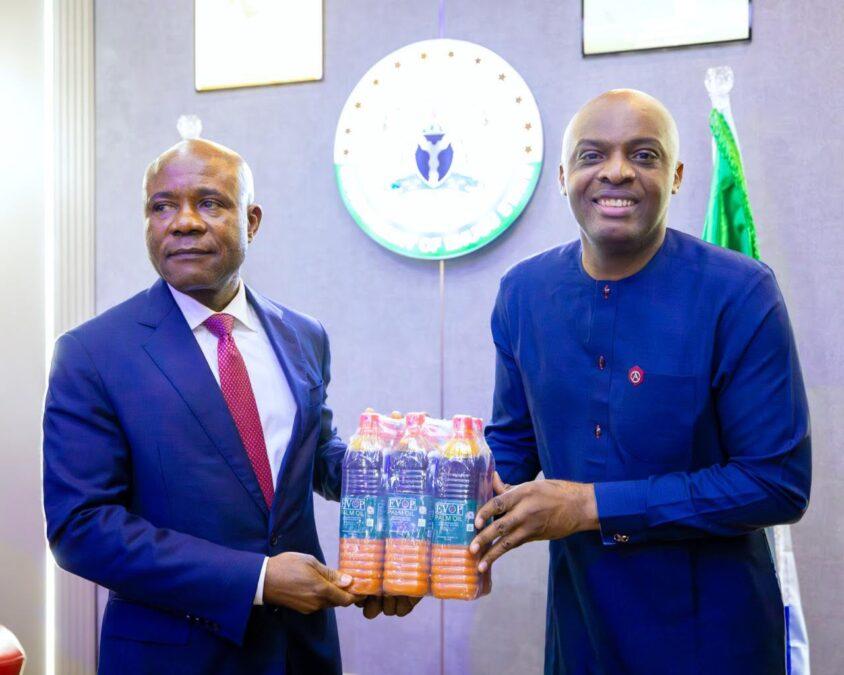
Enugu United Palm Products Limited, UPPL, has commenced commercial production of palm oil for the Nigerian market, marking a major step in the Enugu State Government’s efforts to revive its long-dormant palm oil industry and turn abandoned agricultural assets into productive businesses. UPPL is a public-private partnership between the Enugu State Government and Pragmatic Palms Limited. The company’s Managing Director, Professor George Nwangwu, disclosed the development on September 7, 2026, when he led members of the company’s board to the Enugu State Government House to brief Governor Peter Mbah on the company’s progress and expansion plans.
The company began operations about two years ago as part of efforts to restore the state’s former palm oil assets. Its plantations are located in Ibite-Olo in Ezeagu Local Government Area, Umulokpa in Uzo-Uwani Local Government Area and Ugwu-Oba in Oji River Local Government Area. According to Nwangwu, the company has already replanted more than 1,000 hectares across the plantations as it works to replace ageing palm trees and restore the estates to full productivity.
Some of the palm trees inherited by the company were more than 50 years old and had become unproductive. Nwangwu said the company had cleared overgrown areas, pruned existing trees and embarked on a gradual replanting programme designed to renew the plantations. The wider UPPL estate covers about 6,700 hectares, according to information on the company's history and earlier reports on the revitalisation project.
The commercial production marks a shift from simply rehabilitating the plantations to building an integrated palm oil business. Nwangwu said the company had installed mills and improved both the quality and quantity of palm oil being produced. The company intends to continue investing in processing and refining so that more value can be generated from the palm fruits produced on its plantations.
As part of that expansion, UPPL is investing $2.2 million in a refinery. The planned facility is expected to process crude palm oil into olein and stearin, while also refining palm kernel oil. The company is also developing a new industrial complex to bring more of its production and processing activities together.
The company has also introduced its palm oil brand, Enugu Vegetable Oil Product, known as EVOP. The product has already entered open markets and supermarkets across Nigeria, while sachet packaging is expected to be introduced as the company works to make its products more accessible to consumers. According to Nwangwu, the EVOP name was deliberately chosen to reconnect the new product with Enugu’s agricultural and industrial history.
The name references the former AVOP vegetable oil brand that was produced in Nachi in what is now Udi Local Government Area. The company said the decision was intended to preserve the connection between the revived business and the region’s palm oil heritage. UPPL says its production model is designed to cover the palm oil value chain from cultivation and harvesting to milling, processing and packaging.
The company has also emphasised traceability and said its products carry identification features that allow consumers to obtain information about their source. It said the products have received certification from relevant regulatory agencies, including NAFDAC and the Standards Organisation of Nigeria. The revival of the company is expected to have wider economic implications for Enugu State.
Beyond palm oil production, the project is expected to create employment, increase economic activity in host communities and strengthen the state’s agricultural value chain. Governor Peter Mbah described the partnership between the state government and Pragmatic Palms as a model for reviving dormant government assets. He assured the company that the state would continue to meet its obligations under the partnership and provide the necessary support for the business to reach its full potential.
Mbah also said the state government was preparing to improve road infrastructure serving the plantations. He disclosed plans involving major road projects, including the road from Umumba Ndiagu to Ebenebe, which are expected to improve access to the agricultural estates and facilitate movement of workers and agricultural products. Security around the plantations is another area receiving attention.
The governor said he had directed that the headquarters of the state’s Forest Guards be located at Ibite-Olo, while also promising that the government would address any encroachment on the company’s acquired land. The Enugu State Government has also committed 6,700 hectares to the partnership and indicated its willingness to work with the company and host communities if UPPL decides to expand its target to as much as 10,000 hectares. The broader objective is to create a larger integrated palm oil operation capable of producing and processing significant volumes for the domestic market.
The revival is part of a wider effort to restore Enugu’s agricultural and industrial assets. United Palm Products was originally established in the 1970s and operated across large estates in Ibite-Olo, Ugwuoba and Umulokpa before years of underinvestment, mismanagement and obsolete equipment contributed to its decline. The current partnership is intended to modernise the facilities and restore them to commercial productivity.
UPPL has also indicated that it wants to eventually expand beyond crude palm oil into products such as vegetable oil, olein, stearin and palm kernel oil. This approach would allow the company to capture more value from the palm oil production chain rather than relying solely on the sale of raw or minimally processed products. Governor Mbah further disclosed that the company was targeting a possible listing on the Nigerian stock market within four years.
He said the state government supported the ambition because publicly listed companies could attract additional investment and create greater economic value for Enugu. The commencement of commercial production therefore represents an important milestone in the revival of Enugu’s palm oil sector. With more than 1,000 hectares already replanted, commercial milling underway, a new refinery planned and the EVOP brand entering Nigerian markets, the project is positioning itself as an integrated agribusiness rather than simply a plantation operation.
For consumers, businesses and the Enugu economy, the development could provide a new source of locally produced palm oil while creating jobs and strengthening domestic agricultural production. If the company successfully completes its planned expansion, refining and industrial projects, the revived UPPL could become a significant player in Nigeria’s palm oil value chain.
reference: https://enugustate.gov.ng/2026/09/07/enugu-united-palm-products-begins-commercial-production-of-palm-oil/?utm_source=chatgpt.com
Subscribe To Get Updates on Our Latest Blog Post
No credit card required
0 Comments
No comments yet.
Leave Your Comment
You may also like

NaijaTalk
Subscribe