Blog Detail
NaijaTalk
|2026-11-01
Obasanjo Slams Tinubu Over Borrowing, Warns Debt Could Destroy Future Generations
# Obasanjo Slams Tinubu Over Borrowing, Warns Debt Could Destroy Future Generations
Former Nigerian President Olusegun Obasanjo has criticised President Bola Ahmed Tinubu's borrowing policy, warning that Nigeria's growing debt burden could have devastating consequences for future generations if the country continues to accumulate loans without achieving sustainable economic development. Obasanjo described national debt as more destructive than leprosy, arguing that while the disease affects individuals, excessive government borrowing could impose financial difficulties on entire generations of Nigerians, including those yet unborn. His comments have renewed public debate over the Federal Government's borrowing plans, the country's debt obligations and the long-term sustainability of its economic policies.
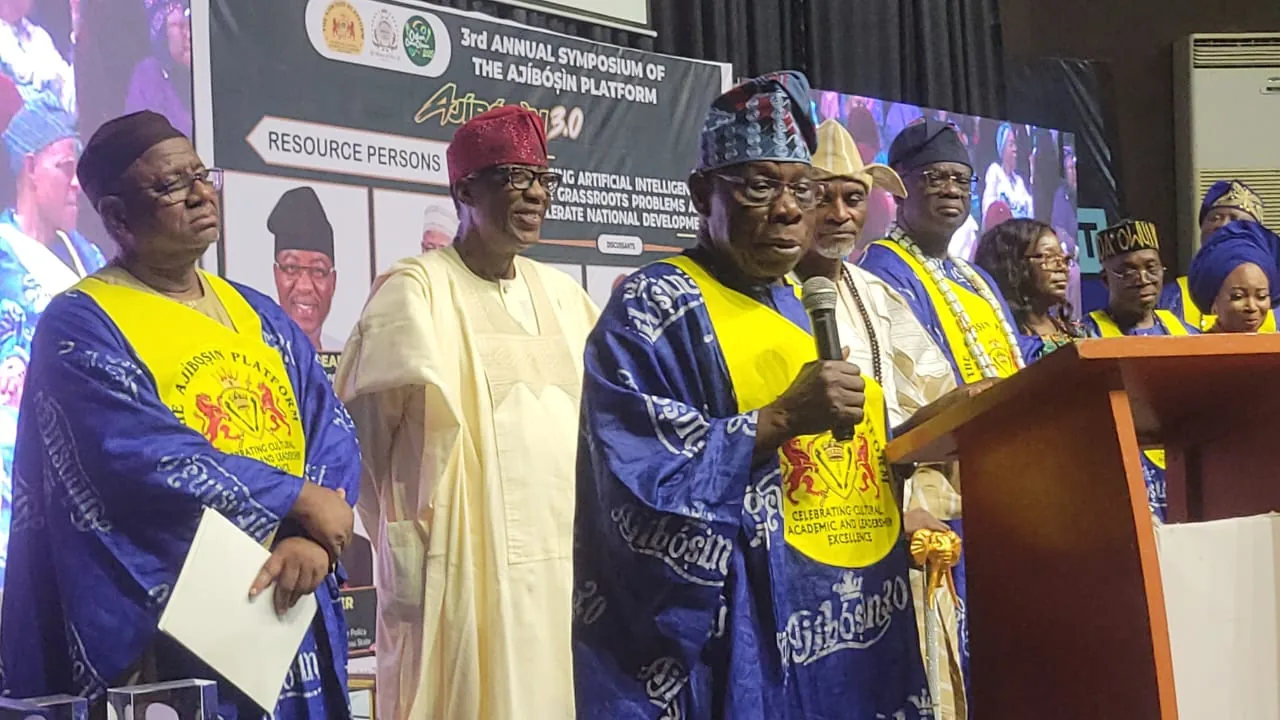
The former president made the remarks on Friday, October 30, 2026, at the third Ajibosin Annual Symposium held in Abeokuta, Ogun State. The event, organised under the theme, "Leveraging Artificial Intelligence to Solve Grassroots Problems and Accelerate National Development", brought together discussions on Nigeria's economic challenges, technological development and possible solutions to problems affecting the country. Obasanjo's criticism followed President Tinubu's recent defence of his administration's borrowing policy, particularly the government's plan to obtain additional external loans to finance infrastructure and other development projects.
Reacting to Tinubu's position, Obasanjo rejected the suggestion that borrowing was not inherently harmful, insisting that the consequences of excessive national debt could extend far beyond the administration that contracted the loans. "And for anybody to say debt is no leprosy is absolute nonsense. Debt is worse than leprosy because leprosy destroys only one person.
Debt destroys generations," Obasanjo said. The disagreement comes months after President Tinubu defended government borrowing during a meeting with political leaders from Plateau State at the Presidential Villa in Abuja in April 2026. The delegation included Plateau State Governor Caleb Mutfwang and All Progressives Congress National Chairman, Professor Nentawe Yilwatda.
During the meeting, Tinubu maintained that borrowing should not automatically be considered a negative economic decision, provided the government had a clear repayment strategy and used the funds productively. "If we have to borrow, we borrow. Borrowing is not leprosy; we just have to work hard to be able to pay for it," the President said.
However, Obasanjo's latest intervention reflects his concern that Nigeria could return to a difficult debt situation if successive governments continue borrowing without sufficient improvements in productivity, revenue generation and economic management. The debate has become more significant following Tinubu's request to the National Assembly for approval to proceed with a supplementary external borrowing plan covering the 2026 and 2027 fiscal years. The proposal includes approximately $20.52 billion and €1.045 billion in external loans.
According to reports, the proposed financing is expected to support projects and programmes across several critical sectors, including infrastructure, transportation, electricity, healthcare, education, agriculture, water supply and national security. The government has argued that additional financing is necessary to address Nigeria's infrastructure deficit and support development projects that require substantial capital investment. The request has generated questions about the country's ability to manage additional debt, particularly at a time when the cost of servicing existing obligations continues to place pressure on government finances.
Obasanjo also questioned Nigeria's economic performance over the past four decades, particularly the significant depreciation of the naira against the United States dollar. He used his personal experience as a farmer to illustrate the changes in the country's economic fortunes. According to the former president, when he established his farm approximately 47 years ago, the naira exchanged at about ₦1 to $1.85.
He expressed concern that the exchange rate had since deteriorated significantly, questioning the economic decisions and leadership strategies that contributed to the situation. "When I started my farm, 47 years ago, naira to the dollar was one naira to $1.85. Forty-seven years ago.
What has Nigeria done in 47 years that we now have 1,500 naira to a dollar? What have we done?" he asked. He further challenged Nigerian political leaders to demonstrate their understanding of the country's economic problems and explain how their knowledge could be translated into practical solutions capable of improving citizens' living conditions. "What do our leaders know? And what do they not know? And from what they know, what can they do for us?" he questioned.
Beyond government borrowing, Obasanjo expressed concern about Nigeria's continued dependence on international financial institutions, particularly the World Bank and the International Monetary Fund. He argued that economic recommendations from foreign institutions should not be adopted without considering Nigeria's unique circumstances and development priorities. "World Bank and IMF were not designed for us.
They were not built by us. They were built before we became independent. And that's the people who would determine what we do," he said.
The former president's comments reflected his broader argument that Nigeria needs to develop economic policies based on its domestic realities rather than depend excessively on external institutions and economic prescriptions. Obasanjo also recalled the debt relief negotiations secured during his administration between 1999 and 2007. His government successfully negotiated an agreement with the Paris Club of creditor nations that resulted in approximately $18 billion in debt cancellation, alongside a broader settlement that helped Nigeria exit a significant portion of its external debt obligations.
The agreement was considered a major development in Nigeria's public finance history, although the country subsequently returned to international borrowing to finance government programmes and infrastructure. The former president also raised concerns about Nigeria's education crisis, particularly the large number of children who are currently outside the formal school system. He cited an estimated 24 million out-of-school children, warning that the situation could create serious social and economic problems for the country in the future.
He described the education challenge as a potential national disaster, arguing that children who are denied access to quality education could face limited opportunities and become increasingly vulnerable to poverty and other social difficulties. Obasanjo also challenged participants at the symposium to examine how artificial intelligence could help Nigeria address pressing national problems, particularly in agriculture, food production and nutrition. He questioned whether emerging technologies could assist policymakers and agricultural experts in identifying the types of food Nigerians need, improving agricultural productivity and ensuring that the country produces sufficient food to meet the nutritional needs of its growing population.
His remarks highlighted the importance of using technology to address practical development challenges rather than allowing Nigeria to remain dependent on imported solutions. Meanwhile, President Tinubu has continued to defend his administration's infrastructure investment strategy, arguing that the success of government borrowing should be measured by the value created through the projects financed with the loans. In a recent statement, the President maintained that the central question should not simply be how much the country borrows but what the borrowed funds are used to build and the economic benefits they generate.
Tinubu has identified major infrastructure projects, including the Lagos-Calabar Coastal Highway, Sokoto-Badagry Superhighway, electricity transmission improvements and upgrades to major commercial ports, as part of his administration's development priorities. The government believes investments in transportation, electricity, healthcare, education and other critical sectors can improve productivity, create employment opportunities, attract private investment and strengthen economic growth. Nevertheless, the disagreement between the two leaders has brought renewed attention to the need for transparency, accountability and effective management of public borrowing in Nigeria.
Economic analysts have consistently noted that borrowing is not necessarily harmful when loans are obtained on sustainable terms and invested in projects capable of generating sufficient economic and social returns. However, excessive debt servicing, weak revenue generation and poor utilisation of borrowed funds can reduce the resources available for essential public services. For Nigeria, the challenge is therefore not only how much money the government borrows but also whether the investments financed through those loans can produce lasting benefits for the population.
Obasanjo's warning has added another dimension to the ongoing national conversation about borrowing, economic management and the country's development priorities. As the National Assembly considers the proposed supplementary external borrowing plan, questions remain about the long-term implications of additional loans and the government's capacity to ensure that the funds deliver measurable benefits. The debate ultimately places responsibility on policymakers to balance the need for infrastructure development with fiscal discipline, responsible borrowing and the protection of future generations from an unsustainable debt burden.
reference:
Subscribe To Get Updates on Our Latest Blog Post
No credit card required
0 Comments
No comments yet.
Leave Your Comment
You may also like

NaijaTalk
Subscribe